Space · Position → Comply → Respond → Get on Panel
The satellites aren't the contract. The ground they stand on is.
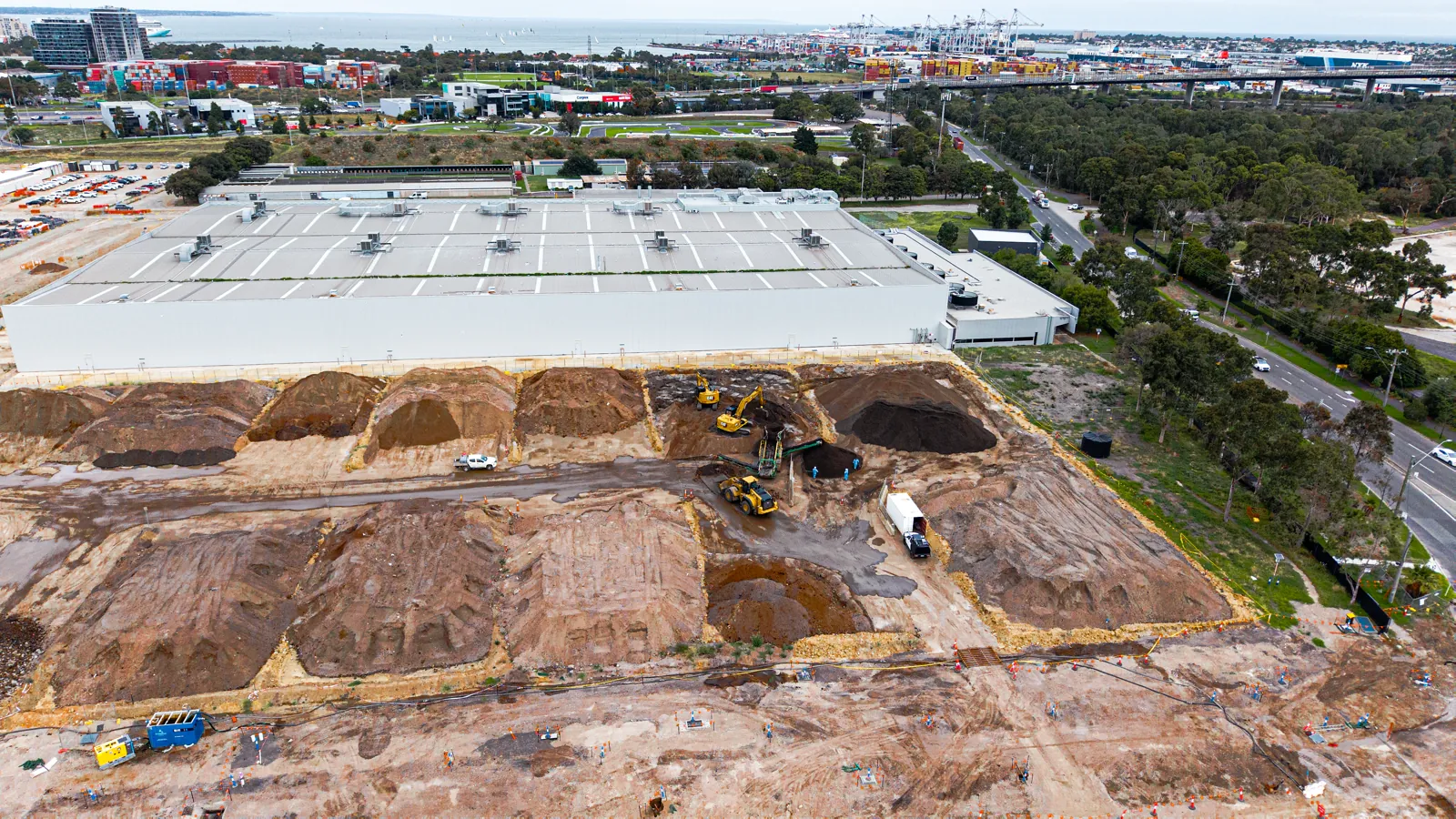
Australian space programs buy earthworks, antenna foundations, secure facilities and comms rooms, tendered as facility works and communications infrastructure on ASDEFCON templates with DISP obligations underneath. The contractors winning it are not space companies.

Visionex Solutions is a proud member of the Australian Industry and Defence Network (AIDN), the peak body for Australian SMEs in defence.
The pipeline
The satellites aren't the contract. The ground they stand on is.
A new Australian ground antenna facility begins construction in 2026 under a $180 million agreement securing ADF satellite communications into the 2030s, with domestic industry participation written into it. Geoscience Australia has tendered a study to scope relocating the Alice Springs Satellite Ground Station, one of three stations in the global Landsat Ground Network. Launch infrastructure is going in at Cape York ahead of small missions from late 2026. Underneath all of it sits $14 to $18 billion of Defence estate renewal across northern bases, and a satellite communications program, SPA9102, rebuilding what Defence cancelled when it axed the $6.9 billion JP9102 in November 2024.
Here's the uncomfortable part: almost none of that reaches a contractor with the word "space" attached to it. Ground segment work is tendered as facility works, estate upgrade, communications infrastructure and site services, on ASDEFCON templates, with DISP obligations underneath. The contractors winning it are not space companies, they're civil and facilities firms who worked out which of their existing capabilities had a security clearance attached and positioned before the RFT existed. The ones who search for "space tenders" find nothing and conclude the market isn't real.
The pattern repeats on every one of these. The Deep-space Advanced Radar Capability at Exmouth broke ground in October 2023, finished construction three months ahead of schedule, and is expected at full operations in 2027. The build phase carried about 100 jobs and it is over. What remains, for decades, is operating and sustaining a radar installation in one of the most remote parts of the country, which is a facilities management contract, not a construction one. See our facility management practice.
Sub-sectors
What we deliver in each
01
Ground segment & antenna facilities
Ground stations, teleports and antenna sites, pads that won't move under a 13-metre dish, redundant power, trenching, hardstand and drainage. Civil work with a clearance attached, scored on a template that has never seen a commercial submission it liked.
02
Satellite communications programs
SPA9102 and the sustainment activity around the existing architecture, plus the ground infrastructure every orbit needs. Subcontract packages sit under primes who are selected long before the work is visible.
03
Launch & range infrastructure
Spaceport pads, access roads, services and hardstand, at Cape York and the smaller range facilities. Early-stage market, commercial buyers as well as Commonwealth, different rules on each.
04
Space domain awareness sites
Radar and telescope facilities, including the C-Band Radar, the Space Surveillance Telescope and the Deep-space Advanced Radar Capability at Exmouth. Remote sites with long build programs and sustainment contracts that run for decades after the last concrete pour, which is where most of the addressable work actually sits.
05
Panels, AIC & supply chain entry
The Australian Space Agency's Space Capabilities and Services Panel and its Support Services Panel, plus AIC positioning with the primes who have to name Australian suppliers. Panel position first, then the orders follow.
How we win space infrastructure tenders
Six strategies, none of them "wait for a tender that says space"
Strategy 01
Search the work, not the sector
Ground segment packages are advertised as facility works, estate upgrades and communications infrastructure. We map the buyers, AusTender for Defence and Geoscience Australia, the ASA panels, the primes' supplier portals, so the opportunity surfaces on the work you actually do.
Strategy 02
DISP readiness before the RFT
Most Defence-adjacent ground segment work requires DISP membership, and membership takes months. We settle your status at go/no-go, not at award, because a brilliant bid from an ineligible bidder scores zero.
Strategy 03
ASDEFCON response mastery
Space programs are procured on the same template suite as the rest of Defence. A commercial civil submission lodged against an ASDEFCON RFT reads as non-compliant, because it is, and it is scored out before merit is assessed.
Strategy 04
AIC plans evaluators can verify
Every Defence contract above $4 million requires an Australian Industry Capability Plan written to the ASDEFCON data item description. Named suppliers, measurable local content, evidence the Australian firms you list can actually deliver. "We support Australian industry" scores nothing.
Strategy 05
Prime-first positioning
Primes are selected before the supply chain is assembled, so the useful move is to be known and named before the subcontract rounds open. We build the capability statement that makes you easy to put in someone else's AIC plan.
Strategy 06
Panel entry strategy
The ASA panels turn open-tender hunting into invitations to quote. A panel application is not a tender for a specific job, it's the argument that you are safe to invite repeatedly for work not yet defined, and it is written differently.
The VXS evaluation lens
How space infrastructure tenders are scored, and where bids die
Critical sections in every space infrastructure tender
- Technical response mapped to the ASDEFCON clause structure, the highest-stakes formatting decision in the bid
- Construction methodology written around site access, escorting, exclusion zones and continuity of operations at a live facility
- Security management plan assessed against DISP obligations, covering site security, personnel, information handling and incident reporting
- Personnel & clearance schedule, named roles, vetting levels, sponsorship pathways and mobilisation lead times
- AIC plan with named subcontractors and suppliers and measurable Australian content
- Risk & transition plan, site-specific, security-aware, tied to the program
Where space infrastructure bids fail
- Searching for the word "space" and concluding there is no pipeline
- A commercial civil response lodged against an ASDEFCON RFT, scored non-compliant on structure before merit is assessed
- Starting DISP when the tender appears, months after the decision point that mattered
- AIC plans with intentions instead of percentages and named suppliers
- Waiting for a public notice on work whose supply chain was assembled before the RFT was written
Groundwork worth reading
Two guides cover the documents and the process behind every submission in this sector.
Planning a space infrastructure bid? Start with a strategy session.
We review your DISP status, capability alignment and ASDEFCON readiness before you commit a dollar to the pursuit.